pet care app

Meow

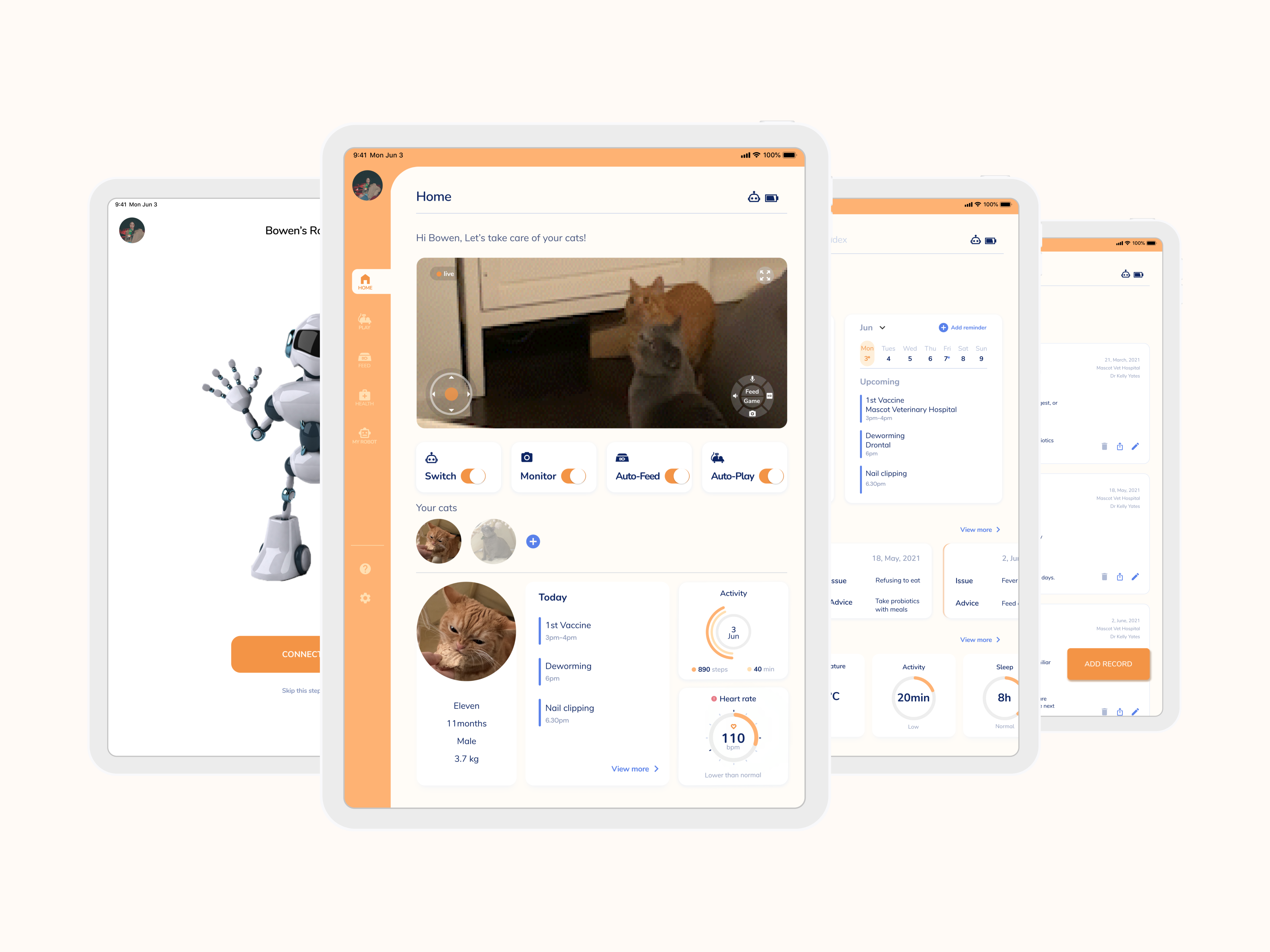
Meow is a pet care app especially for cats that controls a pet-sitting robot to provide a convenient and smart way for pet owners to keep their pets when they can't be with them regularly.
Duration
Aug - Nov 2021
Tools
Figma, Balsamiq, Miro, Adobe Photoshop
Type
UI/UX Design
Role
UX/UI designer for tablet portrait mode

Meow

pet care app
Meow is a pet care app especially for cats that controls a pet-sitting robot to provide a convenient and smart way for pet owners to keep their pets when they can't be with them regularly.
Duration
Aug - Nov 2021
Tools
Figma, Balsamiq, Miro, Adobe Photoshop
Type
UI/UX Design
Role
UX/UI designer for tablet portrait mode

Overview

An intelligent way for busy cat owners

Meow is designed for Gen-Z cat lovers who want to keep their pets scientifically and intelligently. The intuitive user interface manages the robot petsitters, providing an economical solution for owners who work full-time and need to leave their pets alone during the day.
About the client

Nosyd, an electrical company, wanted to design a user-friendly pet-sitting robot to enter the expanding smart pet products market due to increased consumer demand for such products.

Problem

Gen-Z pets owners need a smart and convenient solution to care for their pets while working full time. Existing products on the market are inadequate and robot petsitters offer a promising solution. However, a user-friendly interface to control the robot is needed to meet the needs of pet owners and improve the well-being of their pets.

Solution

Meow offers an intuitive UI to remotely control a pet-sitting robot with smart features for feeding, health monitoring, and exercise. It addresses the pain points of pet owners, providing a scientific and intelligent approach to pet-keeping.

Process
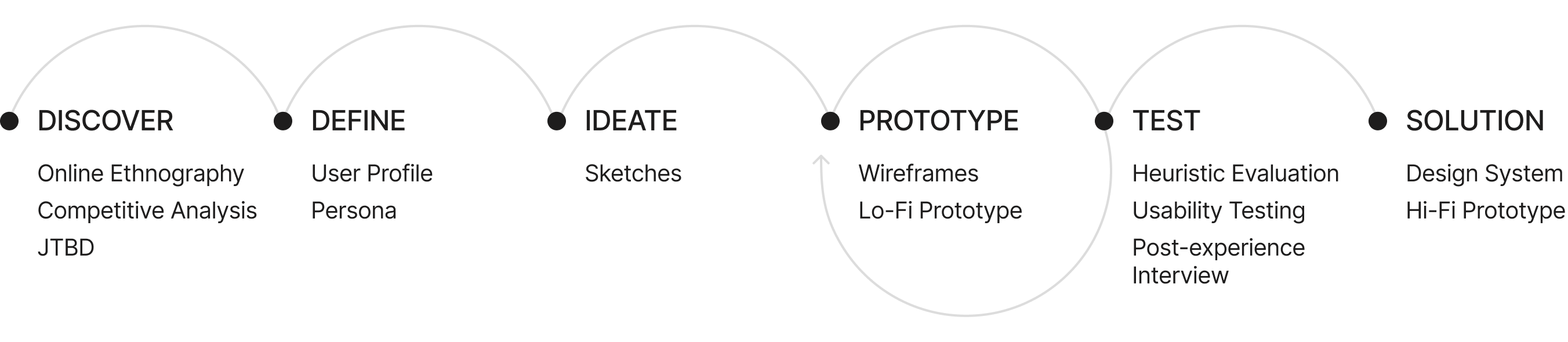
Discover

Pets keeping essentials

Initial research focused on identifying target users for the robot pet sitter through background research to better understand the user's needs in terms of pet keeping as well as measuring the importance of these needs within the target user group.
FOCUS AREAS
01
What groups have the greatest demand for pet robot sitters?
02
Which features are essential to raise pets?
03
What technology products exist for smart pet keeping?
04
What are users current pain points with existing products?
Background Research
Do you Know that?
197%
increase in the number of pet dogs and cats in China relative to 2017, expected to overtake the US by 2024.
10.8%
growth for pet cats in China in 2020, much higher than the negative growth of pet dogs.
24%
cat owners in China aged 16-25 years old. They have a higher demand for smart pet products.
500%
growth in consumption of smart goods for pets in China by 2020.
Source: 2021 China Pet Industry White Paper
Online Ethnography
Based on background research I identified Chinese cat owners as target users and conducted an online ethnography of them on Chinese social media and e-commerce platforms to understand the essential needs of cat keeping and which smart products and features they are using and how they are experiencing them.
A monitoring camera is essential for me to keep an eye on him, not only to accompany him but also to make sure he's okay.
Cats are not expressive and it is difficult for people to notice anything unusual. I often fail to find out in time that my cat is sick.
I rarely spend enough time with my baby, I use the automatic feeder but I am worried about his lack of exercise and company.
KEY INSIGHTS
01
All users used a combination of multiple products to feed, monitoring and accompany cats.
02
Users value the importance of remote control of the robot's switches and separate control of individual functions.
03
Many people think there is a lack of products to track their pets' health.
04
A feature that monitors pet health indicators and alerts abnormalities in time is much needed.
05
Monitoring cameras that can communicate in both directions make users feel better about accompanying their pets
06
Most users find the game feature very useful for relieving pet loneliness and alleviating their guilt of not being able to be there.
Competitive Analysis
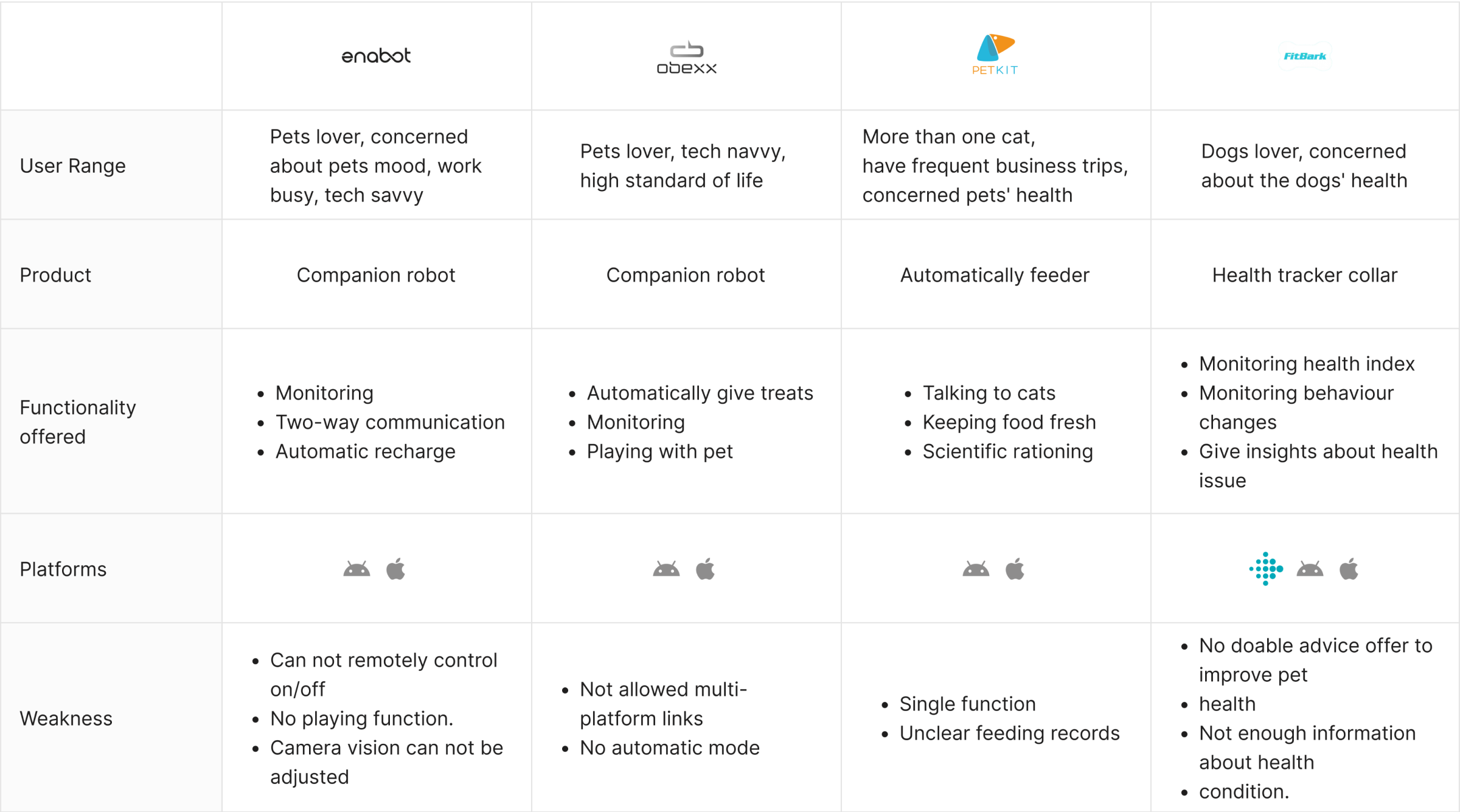
Competitive analysis was conducted to determine the features, strengths, weaknesses and user feedback of the smart pet products currently existing in the market to inform MEOW's features and information structure.
Job To Be Done
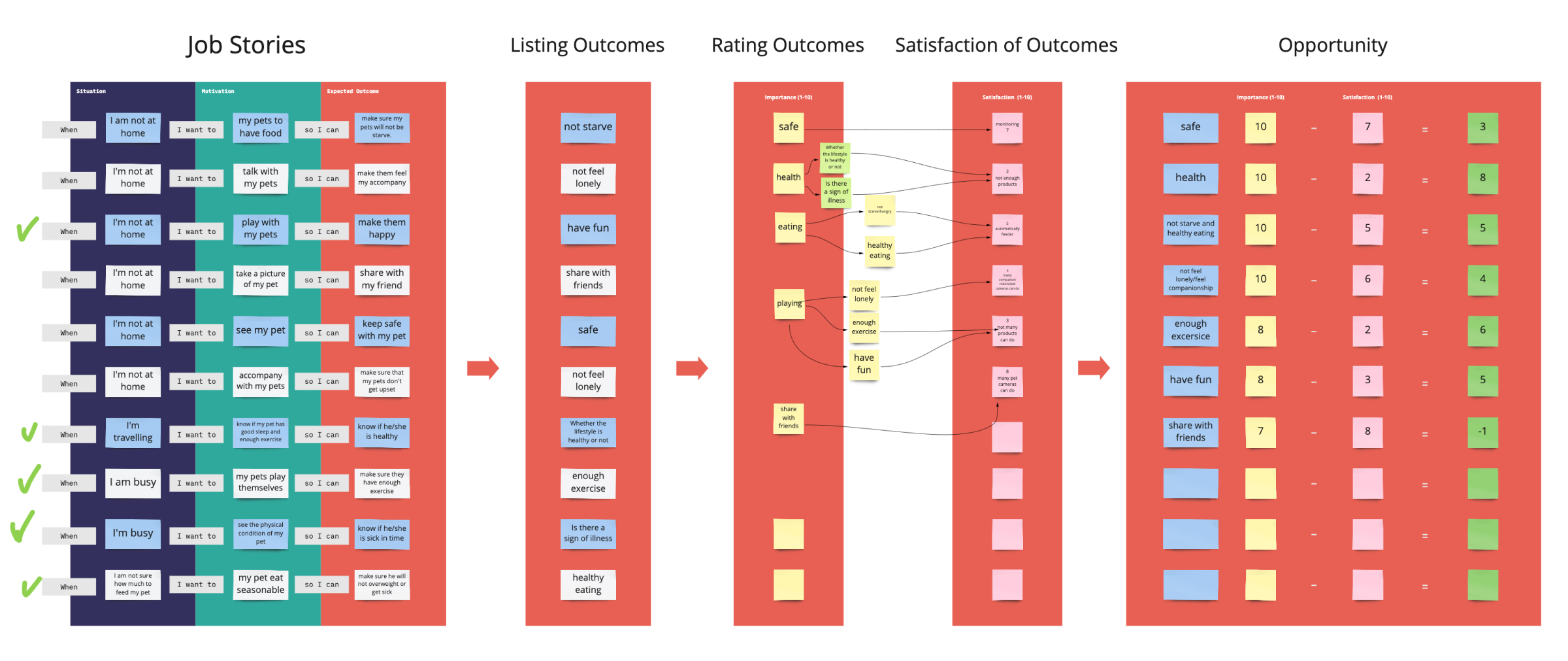
Combining key insights from the preliminary analysis, Job To Be Done was conducted to rank the outcomes and satisfaction, and got some design opportunities to focus on. The results showed that health was the most important user concern and needed to be addressed, followed by the play and feed.

Define

Carving out a niche in an emerging market
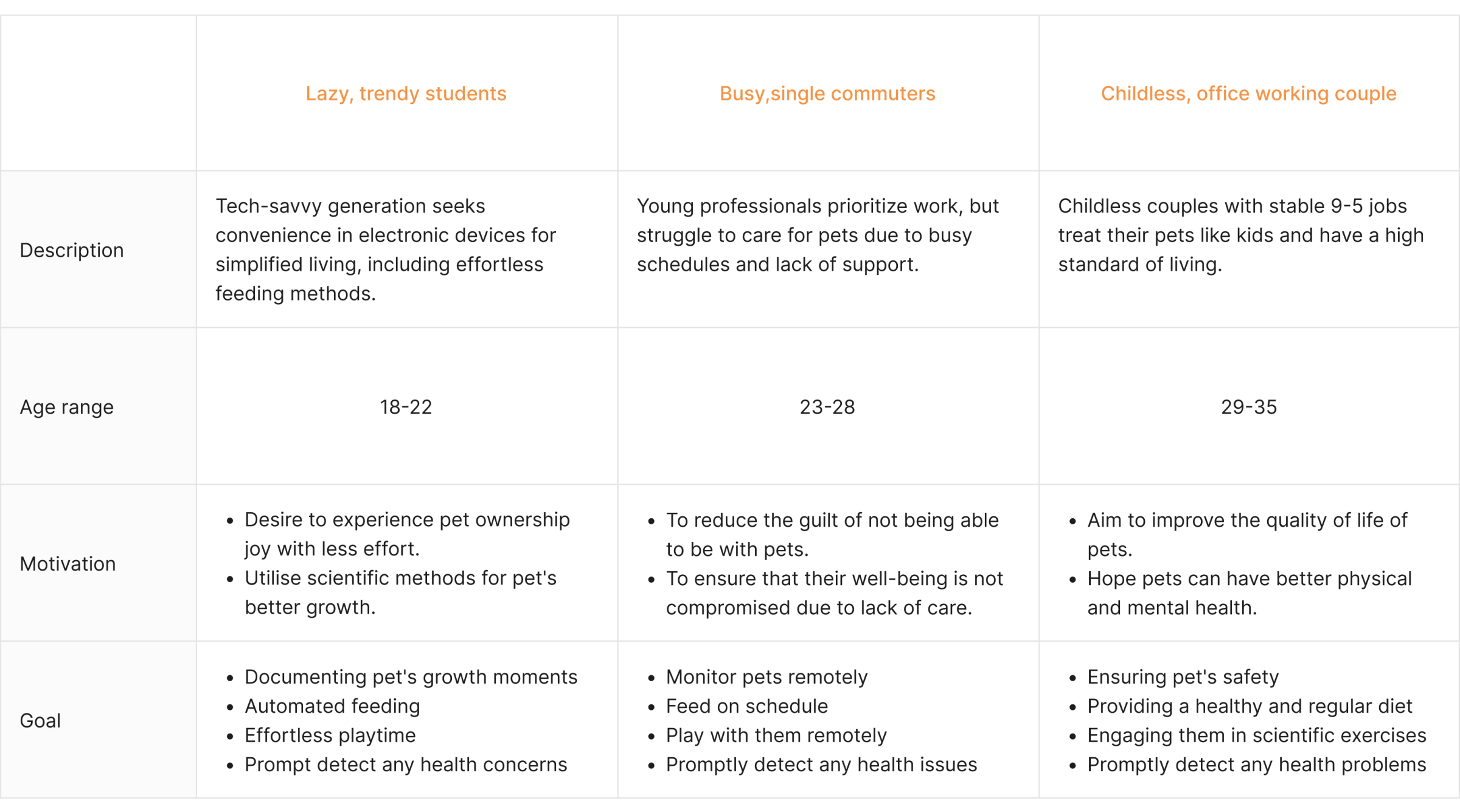
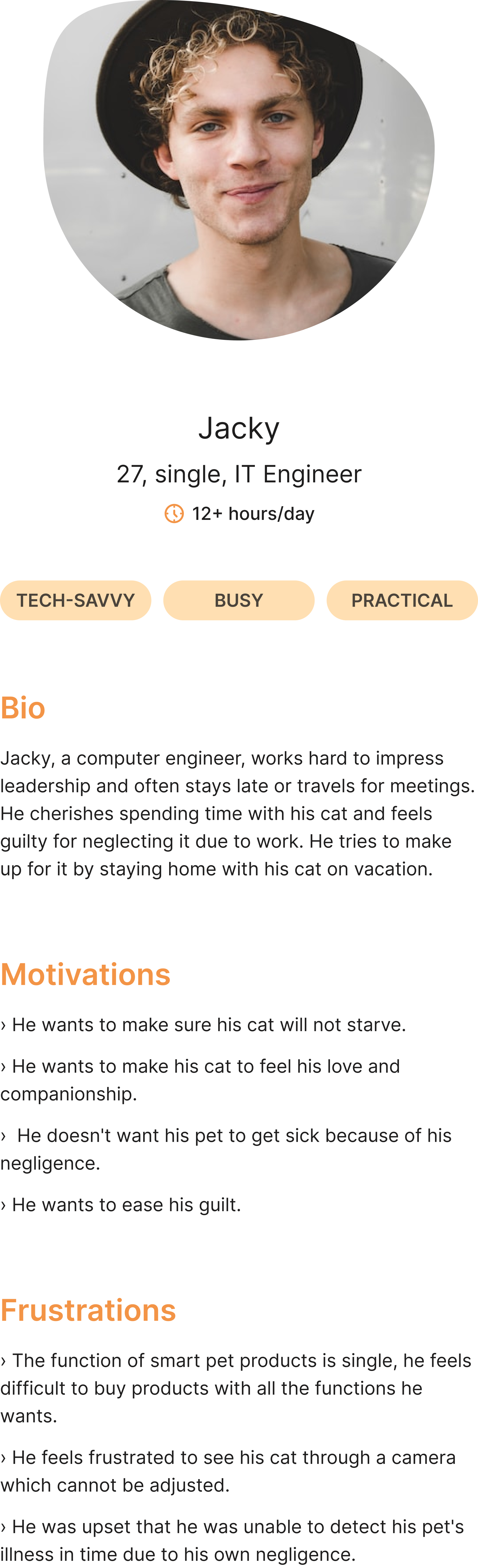
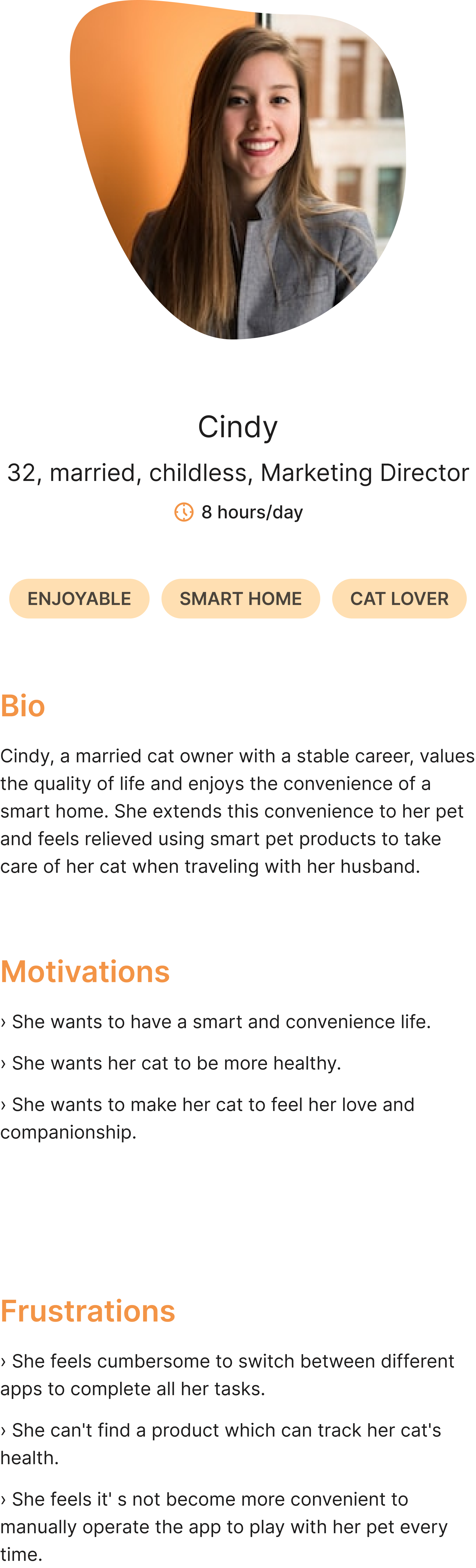
Create user profiles and personas based on the insights gathered from the discovery stage to further understand the goals of the target users and what features and functions are most important to them, in order to narrow down and prioritise user needs and pain points to guide the ideation process and the design of the user interface.
User Persona

Ideate

Focus on the health function
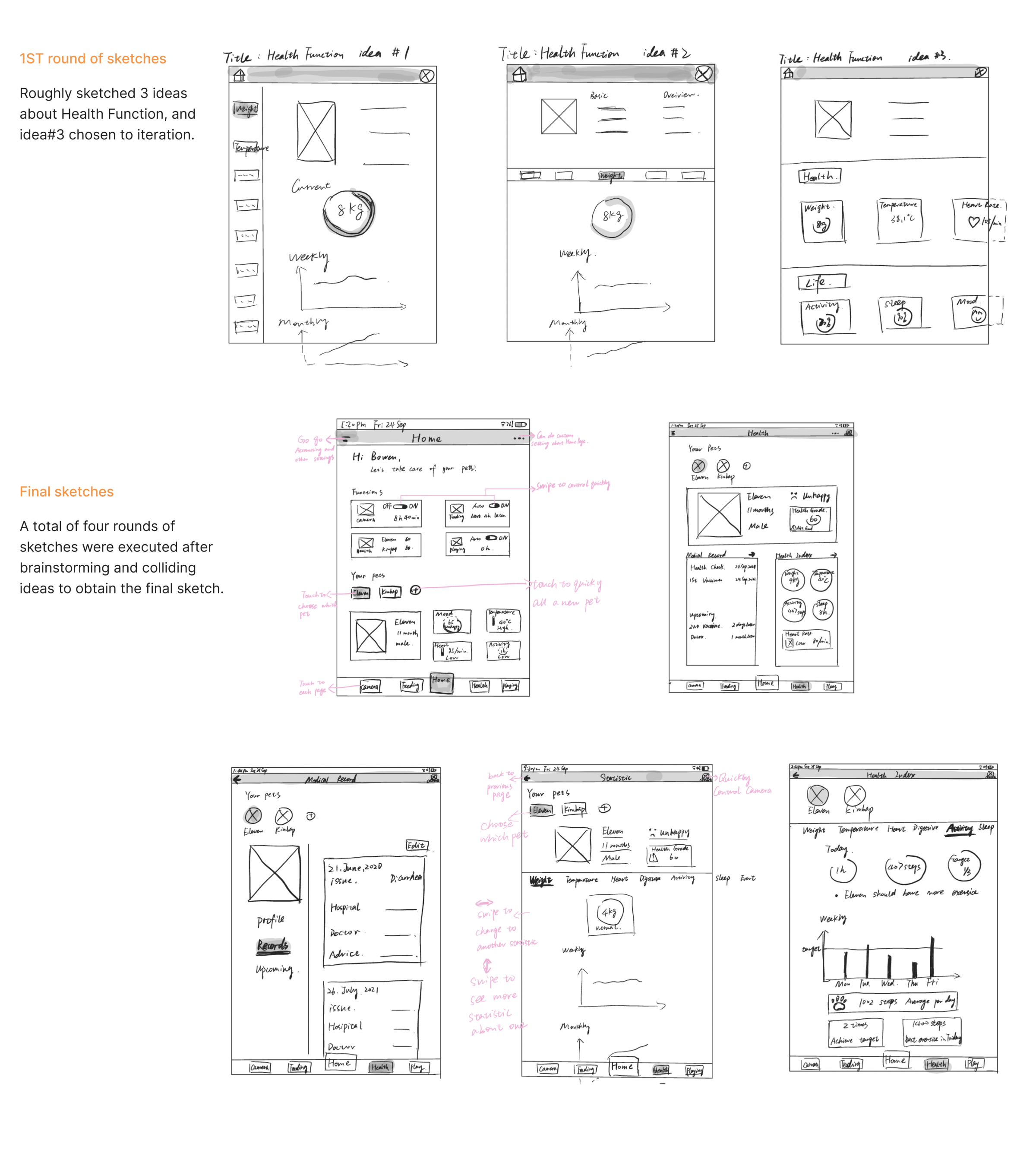
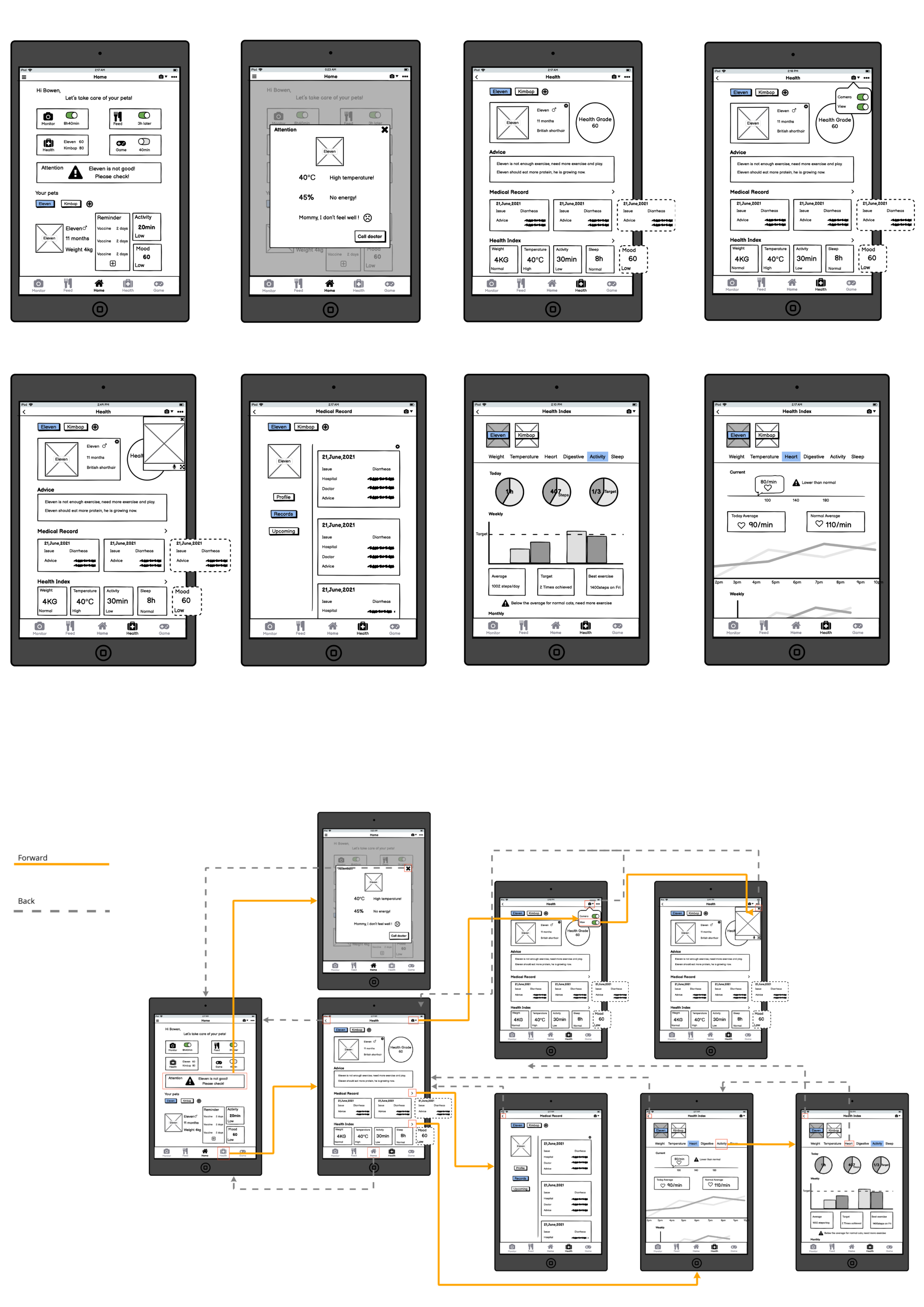
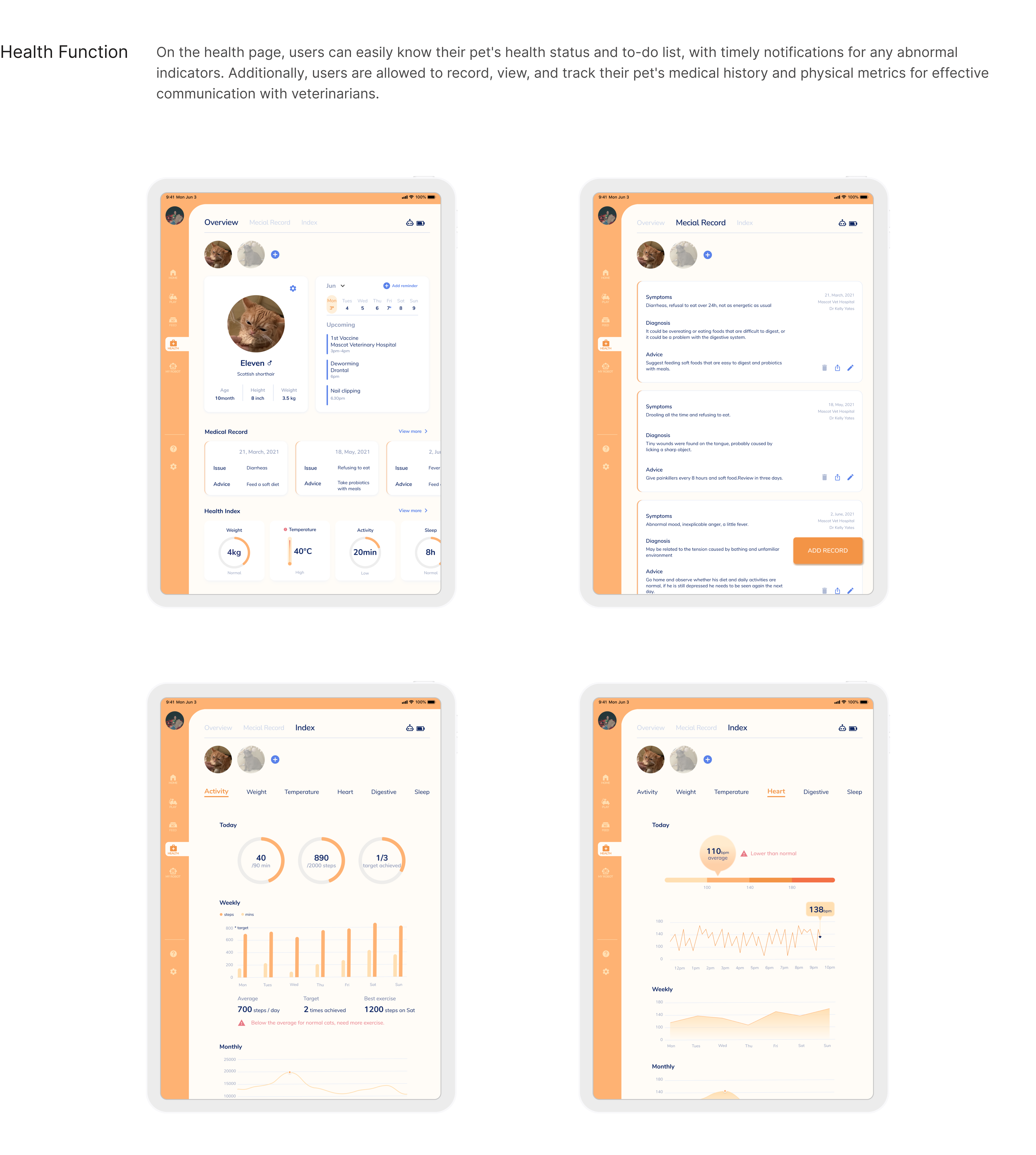
Afterwards, having all these users' issues and needs in mind, I focused on addressing the "How Might We allow users know their pets’ health status" statements. Rough sketches and lo-fi wireframes were created at this stage.
Sketches
Rough sketches to help me quickly record my initial thoughts and brainstorm my new ideas and share my views with the group to select the best one for development and iteration.
Wireframes
Based on the sketches and the group's feedback, a wireframe and the first high fidelity screen which is Home page based on the wireframe were created to obtain further feedback and iterate in an intuitive way.

Test

Focus on the health function

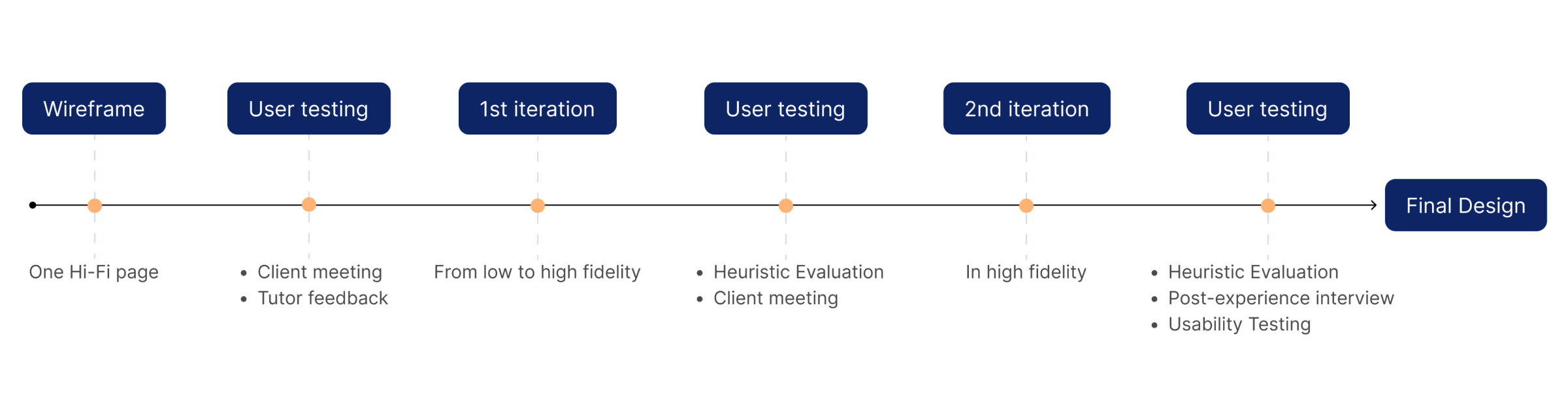
Two rounds of user testing were conducted, including obtaining feedback from clients to determine where improvements could be made to meet users' expectations, needs and desires.
Testing Results
01
The status of robot device is unclear.
02
Some uncommon icons and unnecessary information can lead to user confusion.
03
Navigation from home to medical record and health index is troublesome.
04
Quick edit medical record and turn on/off the robot are not available.
05
The most basic monitoring functions are not highlighted enough.
06
The angle of monitoring cannot be controlled by the user.
No items found.

Design

Simple and practical appearance
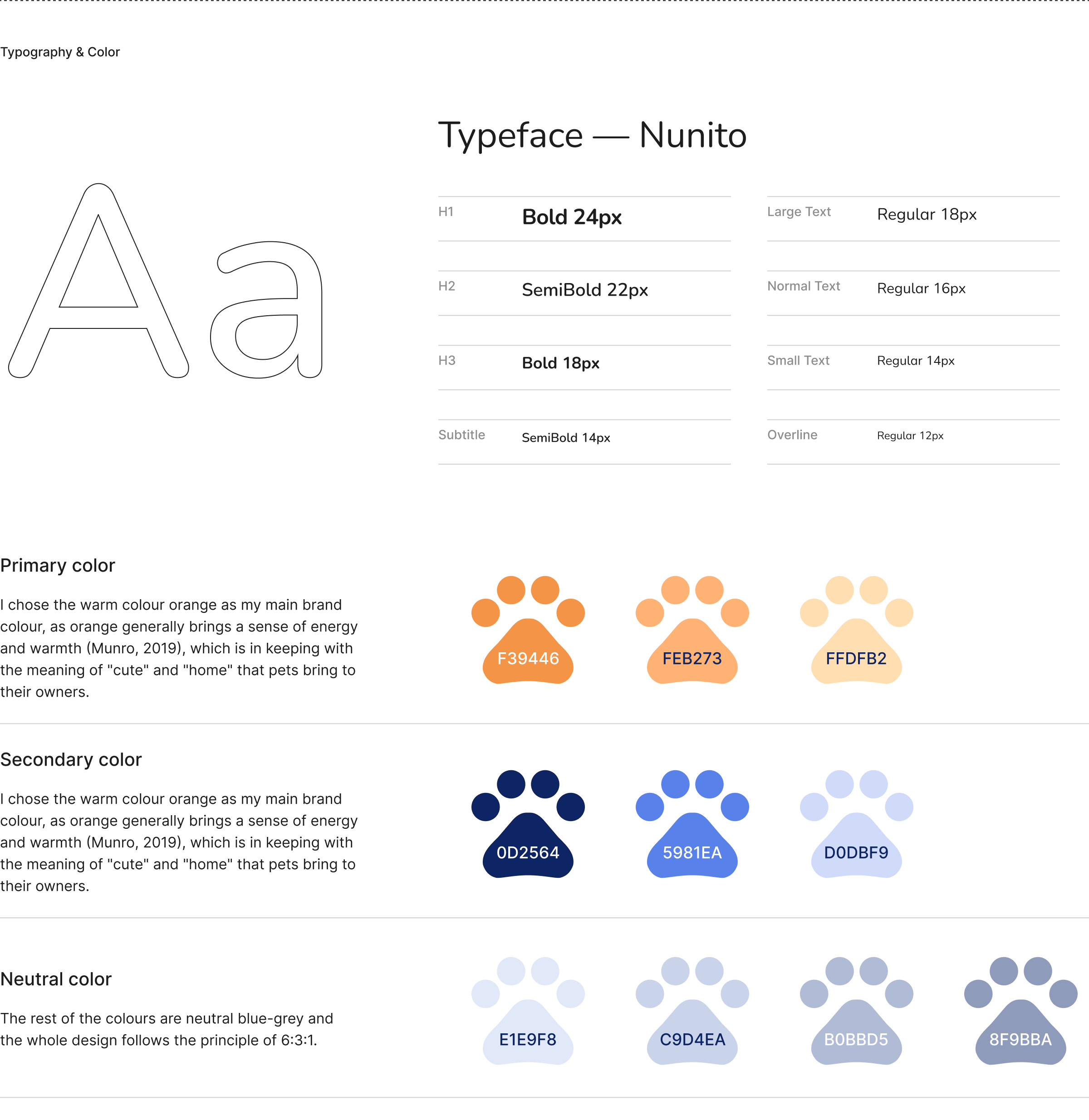
The inspiration comes from the smart homes. The UI design focuses on a clean and practical appearance, without distracting flashy or unnecessary effects.
No items found.

Solution

Final Solution

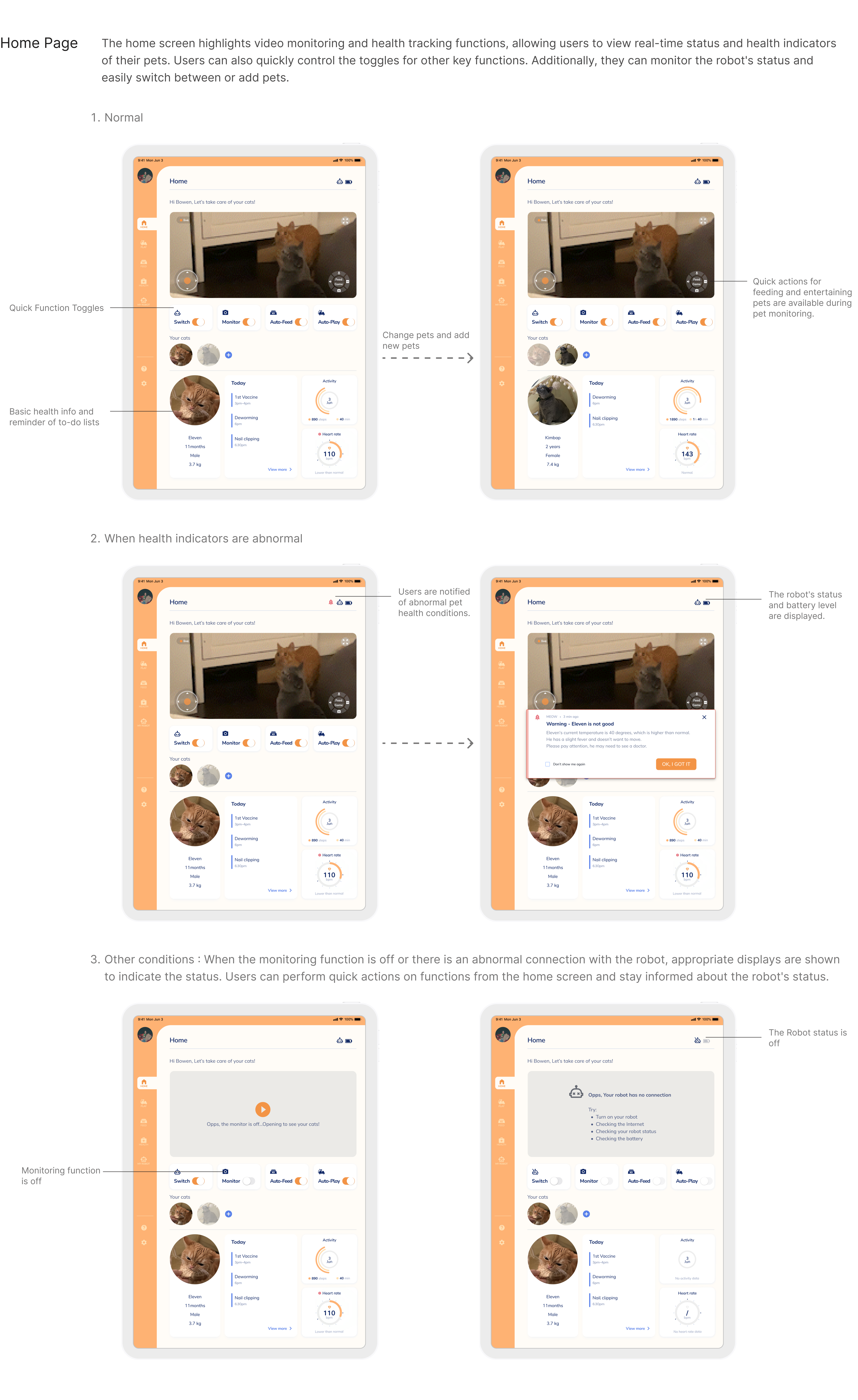
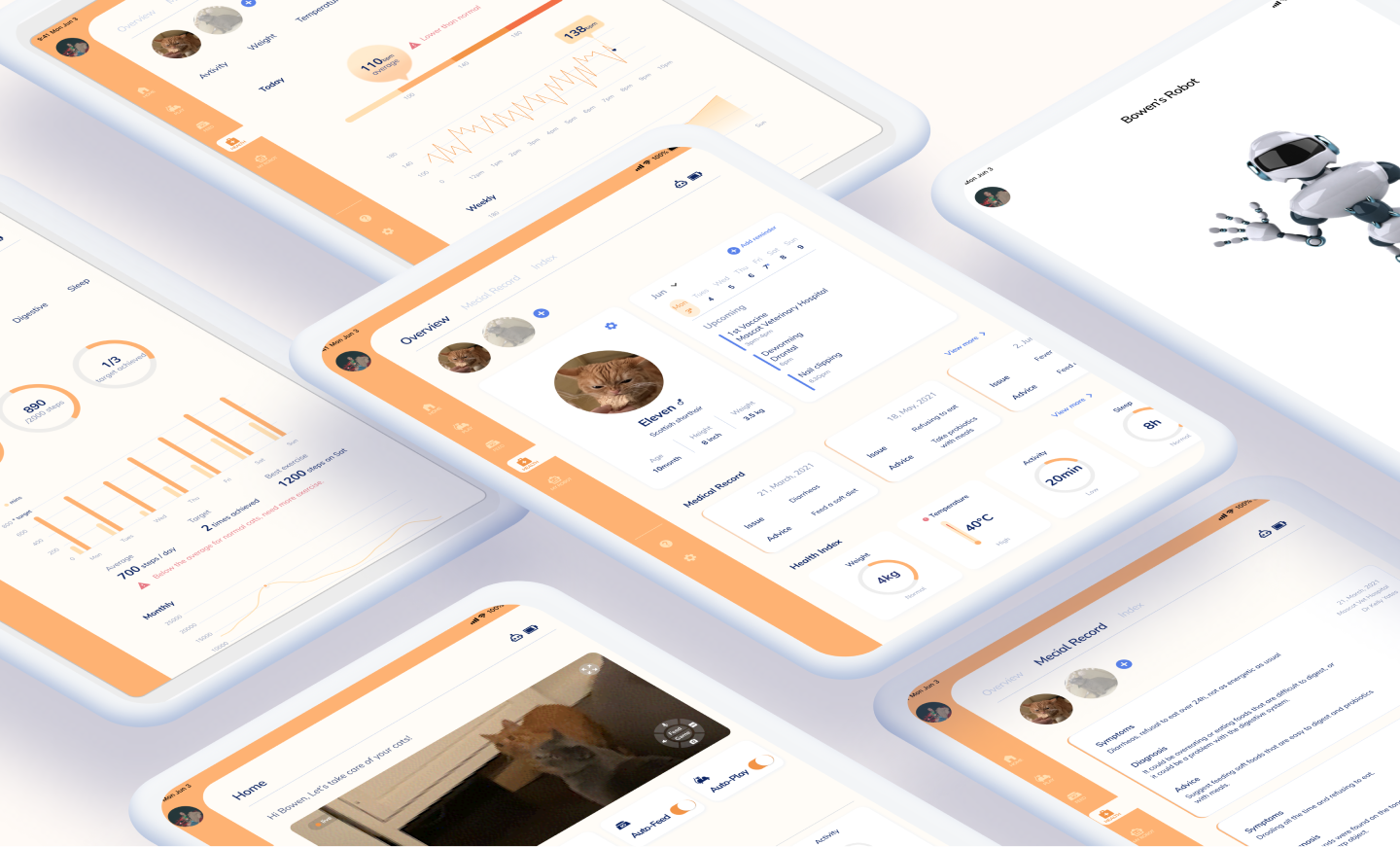
The final solution for the UI was obtained after user testing and iterations. It has 8 screens, with the home screen and health-related screens being dominant.
HOME PAGE
No items found.
Basic Functions
IB Center

Reflection

What I learned

The reflection emphasizes the importance of prioritizing practicality in addressing user problems over purely aesthetic considerations. It highlights the need to avoid flashy but impractical designs and instead focus on meeting user needs based on client feedback and user testing.

Innovation should be focused on the needs of the majority rather than creating something completely new. Users develop habits through long-term use of apps, so it is important to make small innovations and modifications based on their existing habits, making it easier for them to accept and use. Introducing something completely new may be more difficult for users to accept.

The importance of design system is significant. For teams working on different platform versions of the same product, establishing a unified style and design system from the outset enables more efficient work processes and helps maintain design consistency.

Where to improve

Adding an online consultation feature with veterinarians can meet the needs of users to not only receive timely information about their pet's health abnormalities but also obtain suitable solutions promptly.